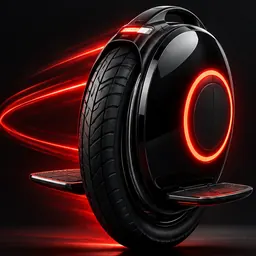

Electric unicycle or scooter? Compare learning curve, range, portability, safety and US rules side by side to pick the right ride for you.
If you’re shopping for a personal electric vehicle, the electric unicycle vs electric scooter question comes up fast. Both are light enough to carry, both run on lithium-ion batteries and both can replace short car trips. But they ride very differently, and the right choice depends on how far you go, where you ride and how much time you’re willing to spend learning. Here’s an honest side-by-side for US riders.
Electric unicycle vs electric scooter at a glance
- Learning curve: a scooter takes minutes; an EUC usually takes days to a few weeks of practice.
- Controls: a scooter has handlebars, a throttle and hand brakes; an EUC has no handlebars and is steered, accelerated and slowed by leaning and shifting your weight.
- Battery and range: at a similar weight, EUCs typically carry far bigger batteries (see the example below).
- Size: an EUC is a single wheel you can stand upright under a desk or in a car trunk; a folded scooter is long and flat.
- Rough surfaces: EUCs use larger wheels, which roll over cracks and potholes more easily than a typical small scooter wheel.
- Legal clarity: many state and city rules name scooters directly; EUCs often fall into a gray area.
A same-brand comparison: InMotion V8S vs InMotion Air
InMotion makes both electric unicycles and electric scooters, which gives us a fair apples-to-apples look. These are the manufacturer’s published specs and claims:
- InMotion V8S electric unicycle: 35.2 lb, 728 Wh battery, claimed range of 46.6 miles, top speed 21.7 mph, 16-inch tire, 264 lb max load, IP54 rating.
- InMotion Air electric scooter: 34.5 lb, 270 Wh battery, claimed range of 22 miles, top speed 19 mph, 10-inch tires, 264 lb max load, IP55 rating, folding to about 44 x 17.5 x 20.5 in.
Weight and load limits are nearly identical, but the unicycle carries roughly 2.7 times the battery capacity and claims about twice the range. That’s the core trade-off in this whole category: with no deck, stem or handlebars to build, an EUC can spend its weight budget on battery and motor. Remember that claimed range is a best-case figure; our guide on how far an electric unicycle can really go explains why real-world miles come in lower.
Learning to ride: the scooter’s biggest advantage
Almost anyone can step onto an electric scooter, squeeze the throttle and ride off. Steering with handlebars and stopping with a hand brake feel familiar from bicycles.
An electric unicycle balances itself front to back, but you control everything else with your body. You lean forward to speed up, lean back to slow down, and twist or tilt to turn, while balancing side to side on one wheel. Most new riders start against a wall or with a helper and need several practice sessions before they’re comfortable. Once it clicks, many riders say it feels more natural than a scooter, with both hands free, but plan for that learning period. If you’re new, start with a forgiving model from our beginner electric unicycles.
Ride quality, range and terrain
Wheel size makes a big difference on real American streets. A 16-inch or larger EUC tire bridges sidewalk joints, cracks and small potholes that can jolt or even stop a scooter with 8- to 10-inch wheels. Because you ride an EUC with bent knees, your legs also act as natural suspension, and many larger wheels add mechanical suspension for trails.
Range follows battery size. As the InMotion comparison shows, an EUC usually fits more watt-hours into the same weight, and long-distance wheels go well beyond 2,000 Wh. If your round trip is long or you can’t charge at work, that gap matters. Browse our commuter electric unicycles to see how battery sizes compare.
Portability and storage
Both weigh about the same at the entry level, but they carry differently:
- EUC: compact and upright, with a pull handle or trolley handle on many models. It fits under a desk, in a small closet or on a bus floor between your feet.
- Scooter: folds flat but stays long (the InMotion Air is about 44 inches folded), which can be awkward on crowded trains or in small apartments. On the plus side, you can roll it by the handlebar.
Bigger, high-performance EUCs are considerably heavier than entry-level models, so if you’ll be carrying your wheel up stairs every day, a lighter model makes sense.
Safety: what the data does and doesn’t tell us
The US Consumer Product Safety Commission (CPSC) estimates there were about 380,000 emergency department visits linked to e-scooters from 2017 through 2024, including about 79,300 in 2024, and it is aware of 206 e-scooter-related deaths over that period. Those numbers reflect how popular scooters are as much as how risky they are, and the CPSC report doesn’t include rider counts or miles ridden.
The same report states that electric unicycles are out of scope, so there’s no comparable federal EUC figure. That means nobody can say from official data which vehicle is “safer.” What is clear:
- Both vehicles can throw you if you hit a pothole or ride beyond the machine’s limits.
- A scooter’s handlebars give you something to hold; an EUC rider typically falls forward onto hands and knees, so wrist guards and knee pads matter.
- On either one, wear a certified helmet, add lights for visibility and follow the CPSC’s advice to expect drivers not to see you.
- Battery safety applies to both. Our electric unicycle battery safety guide covers charging habits and recalls.
Laws: scooters are clearer, EUCs are grayer
Many US states and cities write rules specifically for e-scooters. California is a good example: its Vehicle Code (Section 407.5) defines a motorized scooter as a two-wheeled device with handlebars and either a floorboard or a seat and footrests, powered by an electric motor. A one-wheeled, handlebar-free EUC doesn’t match that wording, which is why EUC riders often find their device isn’t named in local rules at all.
In practice, that means a scooter rider can usually look up exactly where they can ride, while an EUC rider may need to check how their state and city classify the device. Our article are electric unicycles legal in the US? walks through how the rules work.
Which should you buy?
Choose an electric scooter if:
- You want to ride on day one with no learning curve.
- Your trips are short and mostly on smooth pavement.
- You want the clearest possible local rules.
Choose an electric unicycle if:
- You want more range for the weight, or a battery big enough for longer commutes and weekend rides.
- You need something compact for a small apartment, office or car trunk.
- You ride on rough streets or want to explore trails, where options like our off-road electric unicycles shine.
- You’re happy to invest a week or two in learning a new skill.
Leaning toward a wheel? Take our wheel-finder quiz or line up models side by side with the EUC comparison tool.
Frequently asked questions
Is an electric unicycle faster than an electric scooter?
It depends on the model. Entry-level versions of both top out around 19 to 22 mph, as the InMotion examples above show. High-performance EUCs and scooters can both go much faster.
Is an electric unicycle harder to ride than a scooter?
Yes, at first. A scooter takes minutes to learn, while an EUC usually takes several practice sessions. Once learned, many riders find an EUC comfortable and intuitive.
Which goes farther on a charge?
At a similar weight, EUCs usually carry bigger batteries. InMotion’s V8S EUC has a 728 Wh battery versus 270 Wh in its Air scooter, with claimed ranges of 46.6 and 22 miles.
Can I take either one on public transit?
Rules vary by transit agency, so check before you ride. An EUC’s compact shape is often easier to manage in a crowded car.
This article is general information, not legal advice. Laws change, so confirm the current rules with your state and local authorities.
Sources
- InMotion: V8S product page and specifications (accessed October 5, 2026)
- InMotion: Air electric scooter product page and specifications (accessed October 5, 2026)
- CPSC: Micromobility Products-Related Deaths, Injuries, and Hazard Patterns 2017–2024 (April 2026)
- CPSC: Micromobility Information Center (accessed October 5, 2026)
- California Vehicle Code Section 407.5: Motorized scooter definition (accessed October 5, 2026)
Feature photo: Unsplash.