Almost certainly not. FAA rules ban lithium-ion batteries over 160 watt-hours from both carry-on and checked bags, and electric unicycle batteries are far bigger. Here are the rules and your alternatives.
The FAA battery limits
The FAA’s PackSafe guidance for portable recreational vehicles powered by lithium-ion batteries, such as hoverboards and self-balancing scooters, sets three tiers:
- Up to 100 Wh: allowed without specific airline approval, subject to the other conditions.
- 100 to 160 Wh: allowed only with the airline’s approval.
- Over 160 Wh: forbidden in both carry-on and checked baggage.
The FAA notes that most unicycle and Segway-type devices exceed the 160 Wh limit, and that many airlines do not accept these vehicles at all, even when the battery is small enough.
How big are EUC batteries?
Electric unicycle batteries are measured in hundreds or thousands of watt-hours. Across the wheels in our electric unicycle collection, battery sizes run from around 200 Wh on the smallest beginner wheels to over 3,000 Wh on long range models. Even the smallest is above the 160 Wh limit, and EUC batteries are built into the shell rather than designed to be removed and carried separately.
Alternatives when you travel
- Drive. An EUC travels well in a car. Strap it upright or lay it on its side on a blanket, keep it out of direct sun, and never leave it charging in the vehicle.
- Ship it ahead. Some ground carriers accept devices with large lithium-ion batteries, but they are regulated as hazardous materials. Ask the carrier about its requirements before you pack, and use the original box if you still have it.
- Rent or borrow. In cities with an active EUC scene, local riders and shops can sometimes help with a wheel at your destination.
Planning to buy a wheel you can carry more easily, for trains and buses? Look at our commuter electric unicycles, which prioritise lower weight.
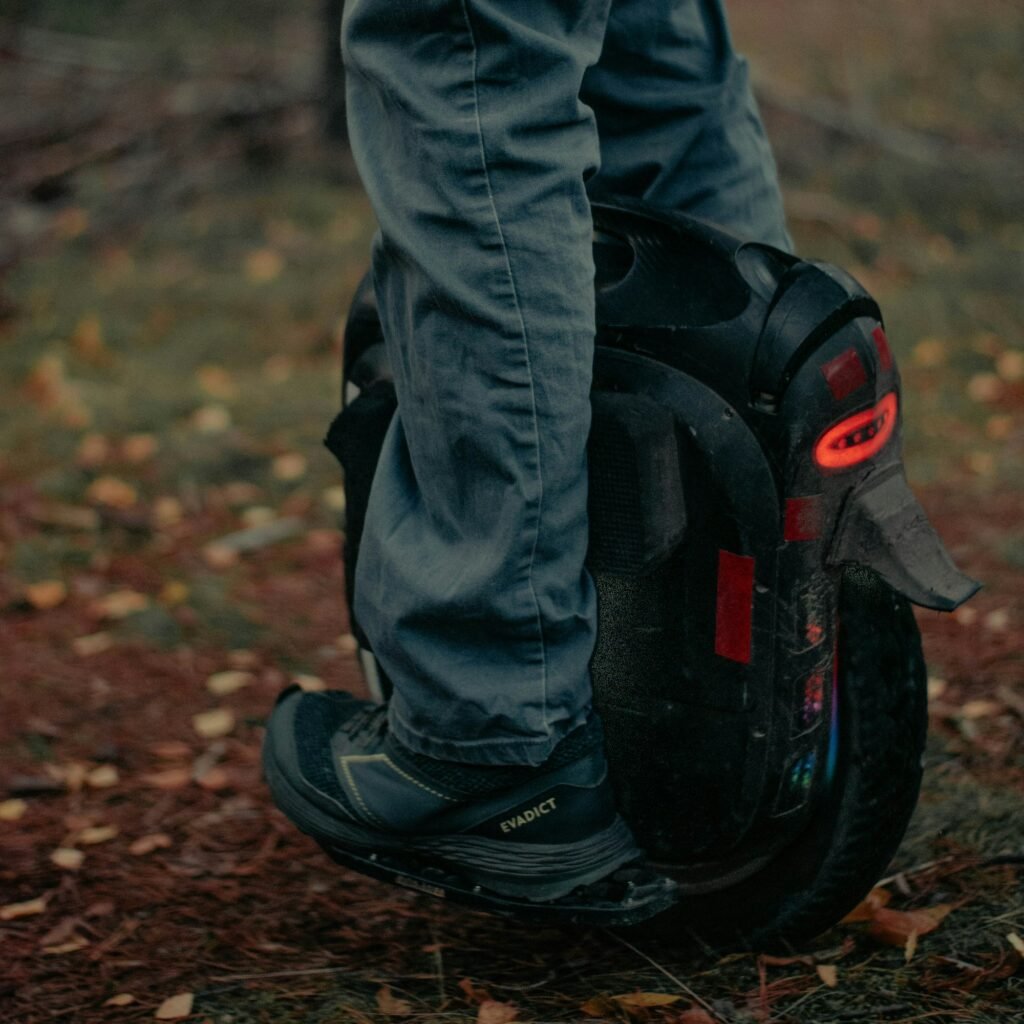
Feature photo: Unsplash.